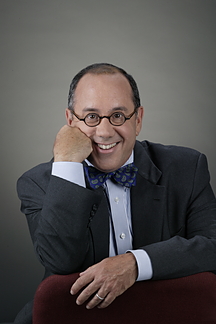
From 1998 to 2005, Doug was the marketing director for a regional law firm with offices in eight cities. While at Stites & Harbison, he managed a coordinated marketing and business development program that saw a doubling of the firm's size and footprint. Mastered the tying of the bow-tie.
Before joining Stites & Harbison, Doug Stern owned and managed a full-service, Louisville-based marketing communications agency for nearly 10 years, working mostly on public policy issues and the marketing of professional services. Doug's clients included the Louisville airport authority and its $800 million expansion and improvement program. He also helped develop communications leading to an increase in the fuel tax for the Michigan Department of Transportation. Doug provided initial marketing communications for the Park DuValle redevelopment, one of the first successful applications of HOPE VI funding in the nation. This is where Doug was first hired to do law firm marketing work. He also had other professional services clients, including physician practices, engineers, architects and health care providers.
Wrote speeches, did advance work and worked on policy research for Harvey I. Sloane, M.D., Jefferson County Judge/Executive.
Ran an award-winning heritage and document management program. Established a program to encourage, accept and manage donations of scenic easements. Staffed the disposition of the Old Louisville Trust Building (including preservation easements) for tax-credit-assisted redevelopment.
Managed a heritage program housed in an urban development office. Oversaw the stabilization of a surplus historic federal property, the U.S. Post Office and Custom House (1875-79, William Appleton Potter). Recognized with awards from the National Trust for Historic Preservation and the National Park Service.
"My first job out of college. Here's where I fell in love with architecture and cities. It's what convinced me that I wanted a career in historic preservation, including graduate school. I also met many wonderful people and mentors--such as Ann Hasset, Helen Abell and Penny Jones. "Toward the end of 1975, I transferred to the city's Department of Building and Housing Inspection. The City of Louisville had just adopted a more progressive landlord-tenant code, and I worked on the public info aspects."
"The summer I was 13, my mother suggested that I get out of the house...and it wouldn't hurt if I made some money while I was at it. I hated the idea of mowing lawns and didn't want the responsibility of a paper route. So, one hot and muggy day, I rode my bike to the nearest golf courseâ-the one at Big Spring Country Club--where I quickly discovered my natural gift for caddying. Eventually, I rose through the ranks and became the #2-ranked caddy in the whole club. (Back before carts, when being a caddy really meant something.) I believe I would have been #1, too...except that I heard that Tommy Knadler had told the pro, Jack Ryan, that young Tommy planned to enter the priesthood. Anyway, I caddied for years, even into college. The money was OK, I liked the game, and the caddy shack was where I learned to drink, gamble, smoke and swearâ-skills I had trouble pursuing at home."
Occasional writer on business communication, architecture and urban design topics. "This is my editorial home in Louisville, where I live. It gives me an opportunity to write about cities, architecture and non-business things that interest me."
Doug Stern is a freelance writer and strategist. He works with public agencies and companies with marketing and business development problems. His clients have included leading law firms, engineers and architects, medical practices and other professional service providers as well as manufacturers and real estate developers--and he's written just about anything you can imagine. Doug has been a professional writer and editor for nearly 30 years, earning several PR and business communication awards. These include a first place for Editorial Writing from the Society of Professional Journalists. He taught writing at the college level. He's also handled just about every kind of writing assignment, including Search-Engine-Optimized Web sites, proposals, speeches, brochures, videos, print ads, press releases and technical reports.
Master of Architectural History
Concentration: 19th-century American architecture
Activities: "I can tell you everything you've ever wanted to know about French-inspired architecture and professional practices in late-19th century America."
Bachelor of Arts
Concentration: Liberal Studies (Urban Affairs focus)
Lap swimming, reading (especially anything by Ed McClanahan), working crossword puzzles, and being with my wife, kids and friends.
 This BrandYourself profile is automatically optimized to show up high in Google